Suit Colour Guide: A Comprehensive Overview
Navigating the world of menswear requires understanding how suit colours impact perception․ This guide explores the psychology, context, and combinations for a polished look․

Understanding the Psychology of Suit Colours
Colour profoundly influences how others perceive you, and suits are no exception․ Navy blue evokes trust and reliability, making it ideal for corporate settings․ Charcoal grey projects authority and sophistication, suitable for leadership roles and formal events․ Black signifies power and formality, often chosen for high-stakes situations or evening wear․
Lighter greys communicate modernity and approachability, fitting for creative industries or less rigid workplaces․ Beyond these classics, burgundy suggests confidence and creativity, while olive green offers an unconventional yet stylish statement․ Brown conveys an earthy, relaxed vibe, perfect for casual business settings․ Understanding these psychological associations allows you to strategically select a suit colour that aligns with your desired image and the message you wish to convey․
The Importance of Context: Occasion and Industry
A suit’s colour appropriateness hinges heavily on both the occasion and your professional environment․ A black suit, while powerful, might be too formal for a casual office or daytime event․ Conversely, a lighter grey or brown suit could appear underdressed for a crucial boardroom meeting or a black-tie affair․
Conservative industries like law or finance generally favour navy, charcoal, and black suits, projecting seriousness and competence․ Creative fields allow for more flexibility, embracing burgundy, olive, or even patterned suits․ Consider the event’s dress code – a wedding demands different colours than a funeral․ Ultimately, selecting the right suit colour demonstrates respect for the setting and enhances your overall professional presentation․

Classic Suit Colours & Their Meanings
Timeless suit colours—navy, charcoal, black, and light grey—convey distinct messages․ Understanding these nuances allows for strategic wardrobe choices and impactful first impressions․
Navy Blue Suits: Versatility and Trust
The navy blue suit reigns supreme as a cornerstone of any well-curated wardrobe․ Its remarkable versatility stems from its ability to seamlessly transition between professional and social settings․ Unlike the stark formality of black, navy projects an approachable yet authoritative aura, inspiring confidence and trust in those around you․
This makes it an ideal choice for interviews, client meetings, and networking events․ Navy complements a wide range of shirt colours, from crisp white and light blue to bolder shades like pink and lavender․ It pairs beautifully with various tie patterns and materials, offering endless styling possibilities․ Consider the fabric weight; lighter navy suits are perfect for warmer months, while heavier wools excel in cooler climates․ A navy suit is a foundational investment, offering enduring style and adaptability․
Charcoal Grey Suits: Authority and Sophistication
Charcoal grey suits embody a refined sense of authority and understated sophistication․ Positioned as a slightly more assertive alternative to navy, charcoal conveys competence and seriousness, making it a powerful choice for leadership roles and formal occasions․ The depth of the colour suggests maturity and a discerning eye for style․
Unlike lighter greys, charcoal works exceptionally well in business settings, projecting an image of stability and reliability․ It’s incredibly versatile, pairing effectively with shirts in shades of white, blue, and even burgundy․ Experiment with tie colours like silver, navy, or deep red to add personality․ A charcoal suit is a smart investment for professionals seeking to command respect and project an image of polished confidence․ Fabric texture, like a subtle herringbone, can elevate the look further․
Black Suits: Formality and Power
The black suit is the epitome of formality and projects an undeniable aura of power․ Traditionally reserved for evening events, funerals, and highly conservative professional environments, a black suit commands attention and respect․ It’s a statement of seriousness and authority, often associated with sophistication and elegance․
However, its versatility is limited compared to navy or grey․ Black suits pair best with crisp white shirts and understated ties – silver, charcoal, or deep burgundy are excellent choices․ Avoid overly bright or patterned ties, as they can clash with the suit’s intensity․ Ensure a perfect fit, as any imperfections are more noticeable with black․ While powerful, overuse can appear severe; consider the context carefully before opting for a black suit․
Light Grey Suits: Modernity and Approachability
A light grey suit embodies a contemporary aesthetic, radiating modernity and approachability․ Unlike darker shades, light grey feels less imposing and more relaxed, making it ideal for business-casual settings, spring and summer events, or when you want to project confidence without appearing overly assertive․ It’s a versatile choice that balances sophistication with a touch of ease․
Light grey pairs beautifully with a wide range of shirt colours – from classic white and light blue to bolder shades like lavender or pale pink․ Navy, burgundy, and even patterned ties can complement a light grey suit effectively․ Consider the fabric; linen or cotton blends enhance the suit’s casual feel, while a wool blend maintains a more polished look․ Don’t shy away from experimenting with textures and accessories to personalize the outfit․
Beyond the Basics: Exploring Alternative Suit Colours
Dare to deviate from tradition with unconventional suit hues! Burgundy, olive, brown, and beige offer unique style statements for the discerning gentleman․
Burgundy Suits: Confidence and Creativity
Burgundy suits exude a bold confidence and a touch of creative flair, setting the wearer apart from the conventional navy or grey․ This rich, deep shade communicates a sense of individuality and self-assurance, making it an excellent choice for those who want to make a statement․
However, burgundy isn’t simply about boldness; it also possesses a sophisticated warmth․ It’s a colour that works particularly well in textured fabrics like tweed or flannel, adding depth and visual interest․ When styling a burgundy suit, consider pairing it with neutral shirts – think crisp white, light grey, or even a subtle patterned shirt․
Accessories should complement, not compete․ A navy or dark brown tie can create a harmonious look, while a pocket square in a complementary shade like teal or mustard can add a pop of colour․ Burgundy suits are best suited for occasions where a degree of personality is welcomed, such as creative industries or social events․
Olive Green Suits: Unconventional Style
An olive green suit represents a departure from traditional menswear, signalling an appreciation for unconventional style and a relaxed yet refined aesthetic․ This earthy tone projects an image of understated confidence and a connection to nature, making it a compelling choice for those seeking a unique look․
Olive green’s versatility lies in its ability to blend seamlessly with various textures and fabrics, from lightweight linen for warmer months to heavier wool blends for cooler seasons․ When styling, consider pairing it with complementary colours like navy, brown, or even muted shades of orange․ A cream or off-white shirt provides a sophisticated contrast․
Accessories can further enhance the look; a brown leather belt and shoes are a natural pairing, while a patterned tie with earthy tones can add visual interest․ Olive green suits are well-suited for smart-casual events, creative workplaces, or occasions where a subtle statement is desired․
Brown Suits: Earthy and Relaxed
Brown suits embody a sense of approachable sophistication, offering a warmer and more relaxed alternative to classic navy or grey․ They project an image of dependability and groundedness, making them suitable for a variety of settings where a less formal, yet polished, appearance is desired․ The shade of brown significantly impacts the overall impression – from lighter tans to richer chocolate hues․
Styling a brown suit effectively involves careful consideration of complementary colours․ Cream, beige, and lighter shades of blue work exceptionally well, creating a harmonious and balanced look․ Avoid overly bright or contrasting colours that can clash with the earthy tone․ Brown leather accessories, such as belts and shoes, are a natural and elegant pairing․
Brown suits are particularly well-suited for business-casual environments, outdoor events, or occasions where a comfortable yet refined aesthetic is preferred․ They offer a versatile foundation for expressing personal style with subtle nuances․
Beige/Khaki Suits: Casual Elegance
Beige and khaki suits represent a departure from traditional formality, offering a relaxed yet refined aesthetic perfect for warmer climates and less conventional settings․ These suits exude a sense of understated elegance and versatility, making them ideal for occasions where a polished look is desired without being overly stuffy․
Successfully styling a beige or khaki suit hinges on pairing it with the right colours․ Navy blue, olive green, and crisp white shirts create a sophisticated contrast․ Brown leather accessories, particularly shoes and belts, complement the earthy tones beautifully․ Avoid black, which can appear too harsh against lighter shades․
These suits are particularly well-suited for spring and summer events, garden parties, or business-casual workplaces․ They offer a comfortable and stylish alternative to darker, heavier fabrics, projecting an image of confidence and ease․
Suit Colour Combinations: Mastering the Look
Elevate your ensemble with strategic colour pairings․ Harmonious combinations of suits, shirts, ties, and pocket squares create a refined and impactful style statement․
Suit & Shirt Colour Pairings: A Guide
Selecting the right shirt colour to complement your suit is crucial for a polished appearance․ With a navy suit, consider white, light blue, or even subtle pink shirts for versatility․ Charcoal grey suits pair exceptionally well with white, light blue, lavender, or even bolder colours like burgundy, depending on the occasion․
For black suits, stick to classic white shirts for formal events; however, a dark grey or charcoal shirt can work for a more modern, subdued look․ Light grey suits offer more flexibility – think light blue, white, pink, or even patterned shirts․ Brown suits benefit from pairing with cream, beige, light blue, or olive green shirts to enhance the earthy tones․
Don’t be afraid to experiment, but always prioritize balance and ensure the shirt colour doesn’t clash with your skin tone or the overall formality of the setting․ A well-chosen shirt can significantly elevate your suit’s impact․
Tie Colours to Complement Your Suit
A tie is a powerful accessory; selecting the right colour can dramatically enhance your suit․ With a navy suit, burgundy, forest green, or patterned ties (including those with subtle reds and blues) work beautifully․ For charcoal grey suits, consider silver, navy, burgundy, or even muted yellows for a sophisticated touch․
Black suits demand classic choices – silver, black (with texture), or deep burgundy ties are ideal for formal settings․ Light grey suits allow for more playful options like navy, pink, coral, or patterned ties․ Brown suits pair well with earthy tones like olive green, burnt orange, or shades of brown itself, ensuring tonal harmony;
Remember to consider the shirt colour when choosing a tie, aiming for contrast and visual interest․ Avoid overly matching colours exactly; instead, opt for complementary shades to create a balanced and refined look․
Pocket Square & Suit Colour Coordination
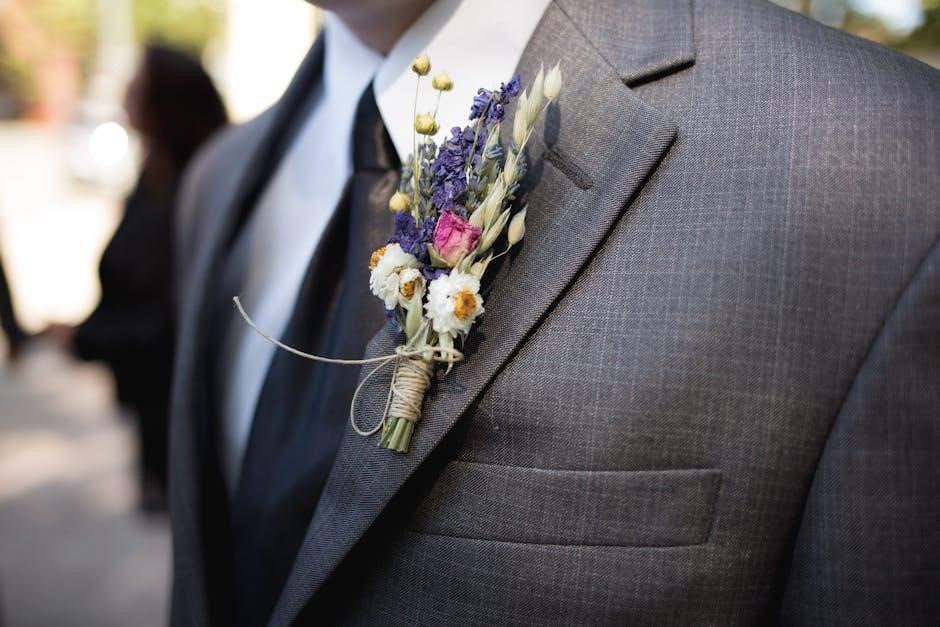
A pocket square adds a touch of personality and sophistication to your suit․ The key is coordination, not strict matching․ With a navy suit, consider a white linen square, or one incorporating shades of burgundy, light blue, or even a subtle pattern․ For charcoal grey, silver, navy, or muted jewel tones work exceptionally well․
Black suits benefit from crisp white or silver pocket squares for a formal aesthetic․ Light grey suits allow for bolder choices – pinks, corals, or patterned squares can inject vibrancy․ Brown suits pair nicely with earthy tones like olive, burnt orange, or patterned squares featuring browns and greens․
Generally, choose a colour present somewhere in your outfit (suit, shirt, or tie) to create harmony․ Avoid perfectly matching the tie colour; instead, select a complementary shade or pattern for a more nuanced look․
Seasonal Suit Colour Choices
Adapt your suit colour to the time of year for a stylish impression․ Lighter shades dominate spring/summer, while richer, deeper tones suit autumn/winter perfectly․
Spring/Summer Suit Colours: Lighter Shades
As the weather warms, transition to suits in lighter, more breathable colours․ Linen and cotton blends become ideal choices, offering comfort alongside style․ Consider pastel shades like light blue, lavender, or a soft grey – these evoke a sense of freshness and approachability, perfectly suited for daytime events and warmer climates․
Beige and khaki suits are also excellent options, offering a relaxed yet sophisticated aesthetic․ These earthy tones pair well with crisp white or light-coloured shirts․ Don’t shy away from lighter greys; they provide versatility while remaining cool and contemporary․ Avoid overly dark or heavy colours like black or charcoal, as they can appear out of place during the brighter months․
Ultimately, spring and summer suit colours should reflect the season’s vibrancy and ease․ Embrace lighter fabrics and hues to stay comfortable and stylish throughout the warmer periods․
Autumn/Winter Suit Colours: Richer Tones
When the leaves change, your suit colours should follow suit, embracing deeper, more luxurious shades․ Autumn and winter call for fabrics like wool and tweed, offering warmth and texture․ Classic choices include charcoal grey, navy blue, and even deeper shades of brown, providing a sophisticated and grounded appearance․
Consider incorporating colours like burgundy or olive green for a touch of personality, but maintain a sense of refinement․ Black suits are particularly appropriate for formal winter events, exuding power and elegance․ Pair these richer tones with complementary shirts in shades of white, cream, or muted jewel tones․
Heavier fabrics and darker colours not only look seasonally appropriate but also provide practical warmth during colder months․ Embrace the richness of the season with a suit that reflects its depth and character․
Suit Colour and Skin Tone
Selecting a suit colour that harmonizes with your complexion elevates your entire appearance․ Understanding cool, warm, and neutral undertones is key to a flattering fit․
Cool Skin Tones & Suit Colour Recommendations
Individuals with cool skin tones, characterized by bluish undertones, generally look best in suits that echo those cool hues․ Navy blue is an exceptional choice, enhancing the skin’s natural vibrancy and projecting an air of trustworthiness․ Charcoal grey also works remarkably well, providing a sophisticated and authoritative appearance without washing out the complexion․
Avoid warmer tones like browns and oranges, as they can create a clash and make the skin appear sallow․ While black suits are acceptable for formal occasions, they can sometimes be too harsh against cool skin․ Consider incorporating cool-toned shirts and ties – think crisp whites, light blues, and shades of lavender – to further complement your skin tone․ Silver accessories will also enhance the overall look, creating a cohesive and polished ensemble․
Warm Skin Tones & Suit Colour Recommendations
For those with warm skin tones – possessing golden or yellow undertones – suit colour selection should focus on amplifying that natural radiance․ Brown suits, in shades like chocolate or olive, are exceptionally flattering, creating a harmonious and earthy aesthetic․ Olive green itself is a fantastic option, offering an unconventional yet stylish choice that complements warm complexions beautifully․
Navy blue can still work, but opt for warmer shades of navy․ Avoid cool greys and stark blacks, as these can appear draining against warmer skin․ Pair your suit with shirts in warmer tones like cream, olive, or even muted oranges․ Gold accessories will further enhance your warm undertones, completing a sophisticated and balanced look․ Consider patterns with warm hues to add depth and visual interest to your outfit․
Neutral Skin Tones & Suit Colour Flexibility
Individuals with neutral skin tones – exhibiting a balance of warm and cool undertones – enjoy remarkable flexibility when choosing suit colours․ This means a wider range of shades will complement your complexion without clashing․ Classic choices like navy blue and charcoal grey are universally flattering and remain excellent options․
You can confidently experiment with bolder colours, such as burgundy or even lighter greys, knowing they won’t overwhelm your natural colouring․ Black suits are also suitable, though consider the occasion to ensure appropriateness․ Shirt colours can span the spectrum, allowing for creative pairings․ Silver or gold accessories both work well, providing options to tailor your look to personal preference․ Embrace the versatility and enjoy exploring different styles!

Caring for Your Suit to Maintain Colour
Proper cleaning, careful storage, and preventing fading are crucial for preserving your suit’s vibrant colour and extending its lifespan significantly․
Proper Cleaning and Storage
Maintaining a suit’s colour vibrancy hinges on diligent cleaning and storage practices․ Dry cleaning is generally recommended, but avoid excessive cleaning as it can degrade fibres․ Spot clean minor stains immediately with a soft cloth and appropriate cleaner․ Always air out your suit after each wear to release wrinkles and odours before storing․
Storage is equally vital․ Use broad, shaped hangers to preserve the suit’s structure and prevent shoulder distortion․ Cover suits with breathable garment bags – plastic traps moisture and encourages mildew․ Store in a cool, dark, and dry closet, away from direct sunlight, which causes fading․ Rotate your suits to ensure even wear and tear, extending the life of each garment and maintaining its original colour for years to come․
Preventing Colour Fading
Colour fading is a common suit woe, but preventative measures can significantly extend vibrancy․ Limit prolonged exposure to direct sunlight, a primary culprit in colour loss․ When travelling, store suits in garment bags within the cabin of the plane, avoiding the potentially harsh conditions of the cargo hold․
Consider a fabric protector spray upon purchase to create a barrier against stains and UV damage․ Rotate your suit wardrobe regularly; frequent wear of the same suit accelerates fading․ When dry cleaning, inquire about environmentally friendly solvents, as harsher chemicals can strip colour․ Finally, proper storage – away from light and moisture – is paramount․ A little care ensures your suit retains its rich hue for a lasting, sophisticated impression․